
If you’ve ever wanted to try meditation but weren’t sure where to begin, you’re in the right place. Meditation doesn’t require special equipment, hours of silence, or a perfectly quiet mind—it simply starts with intention, comfort, and presence. Here’s a gentle step-by-step guide to help you ease into your own meditation practice.
1. Make Time for It
Finding time can be tricky, but regular meditation is most effective when it becomes a part of your routine. There’s no hard rule—just 20 minutes a day can make a real difference.
Try meditating in the morning to set the tone for your day, or in the evening to release tension before bed. That said, the best time is the one that fits your lifestyle. Make it yours.
2. Choose a Comfortable Space
You don’t need a fancy cushion or quiet mountaintop—just a cozy spot where you can sit comfortably and feel at ease. Make it a place so comfortable that you will enjoy coming back to it everyday. Over time you will come to look at your designated space as a calming, comfortable place.
You can sit cross-legged on the floor using a yoga mat, towel, or rug, or simply settle into a chair or your bed. The key is to be upright but relaxed. Good posture helps keep you present, and a cushion can offer extra support. If you’re sitting on a chair or bed, choose something that supports your back so you’re not sinking in too deeply.
3. Set Your Intention
Before you begin, pause and ask yourself why you’re meditating. Maybe you’re looking for peace, focus, or a moment of stillness in a busy day. Whatever it is, take a few seconds to acknowledge your intention. It doesn’t need to be profound—it just needs to be yours.
4. Focus on Your Breath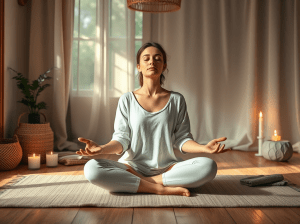
Gently close your eyes and turn your attention inward. Begin by noticing your breath—the gentle rise and fall, the air moving in and out. You don’t need to change anything just observe. If your mind drifts, that’s okay. Softly bring your focus back to your breath each time. That act of returning is meditation in motion.
5. Be Kind to Your Thoughts
Thoughts will come and go, and that’s completely normal. Instead of pushing them away, observe them without judgment. Let them drift by like clouds passing through the sky. The goal isn’t to have a blank mind it’s to become aware of your thoughts without getting tangled in them. Thoughts are a way of letting go of stress.
6. Ease Out Gently
When you’re ready to finish, slowly bring your awareness back to your surroundings. Notice the sounds around you, the feeling of your body, the rhythm of your breath. Take a stretch, gently blink your eyes open, and allow yourself a moment to transition back into your day.
7. Make It a Habit
Consistency is key. Even a few minutes of meditation each day can build a strong foundation of calm, clarity, and resilience. Whether you set a reminder, link it to your morning rituals, or wind down with it at night, find a rhythm that supports you.
You can also chant out loud. Many people use the Sanskrit word “shanti,” which means “peace”, or “om” a sacred sound. Or choose a word from your own religious tradition. You may find that chanting will help you drown out thoughts. Tai chi and qigong are moving forms of meditation that combine physical exercise with breathing and focus. Walking meditation turns your focus to both body and mind as you breathe in time with your footsteps.

One of the key elements of meditation is learning to focus your attention. This focus helps quiet the mind and creates space away from the everyday thoughts that cause stress and anxiety. You can direct your attention to a specific object, a visual image, a repeated mantra, or simply your breath—whatever helps bring you into the present moment.
Final Thoughts
Meditation is a simple but powerful tool that can help you reconnect with yourself. Be gentle as you begin—there’s no “perfect” way to do it. The more you show up, the more natural it becomes. Within just a week or two of regular meditation, you should see a noticeable change in your mood and stress level. Start where you are, breathe, and enjoy the journey.
Transcendental Meditation is a well-known technique in which you repeat a mantra, a word, phrase, or sound—to quiet your thoughts and achieve greater awareness. I personally was taught Transcendental Meditation in 1975. I use a mantra given to me. I have also used apps like Calm https://www.calm.com/ and Headspace https://www.headspace.com/ and Balance https://balanceapp.com/.
I am sure you could find something to fit your meditation needs. Choose simply being still in the awareness of your breath or walking outdoors while meditating. The outcome will be the same; a feeling of calm and peace.
Please share in the comments if you’ve tried meditating on your own or with an app. I’d love to hear from you!







 janetsgreenplanet
Please Leave a Reply